

Why accessibility must shift left in mobile development
Accessibility in mobile apps is gradually moving from a niche consideration to a structural requirement. With legislation such as the European Accessibility Act, expectations placed on organisations are changing. Accessibility is no longer only about brand values or corporate responsibility. It is increasingly becoming a legal and organisational obligation.
At the same time, we often see that accessibility is treated as a final validation step rather than as a design and engineering principle within the development process. Companies approach us to audit their mobile app once it has been designed, built and functionally tested. Internally, the product is considered finished. The audit is requested to verify compliance or provide evidence that requirements are met.
The underlying assumption is that an app built according to professional standards is therefore also accessible. Yet once we begin the audit, we frequently discover that accessibility was never structurally integrated into the process.
This situation is closely linked to App Accessibility Maturity Model. Though many organisations consider themselves engaged, their development process remains reactive. Accessibility may be acknowledged in strategy, but it is not integrated into early decision making. As a result, it only becomes visible after release, when changes are expensive and complex. Approved systems must be adjusted, components adapted and additional validation introduced. Accessibility starts to feel like additional work instead of a quality standard.
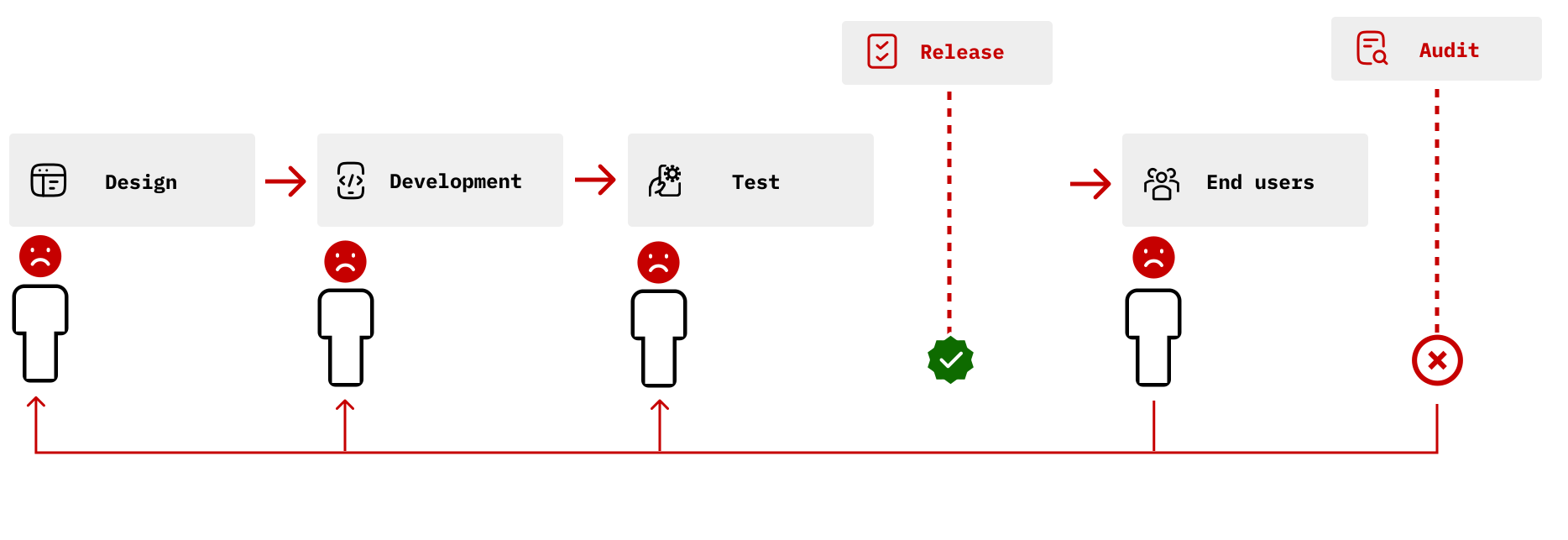 Shifting left
Shifting left changes how accessibility is implemented and evaluated.
Instead of performing one large audit at the end of the process, when the entire app is already built, the evaluation is divided into smaller iterations.
In practice, this means that the full scope of an audit is broken down into manageable parts. Instead of validating the complete application in one moment, individual screens, components or user flows are assessed step by step.
During the design phase, accessibility considerations are validated before visual systems scale across the product. During development, components are checked as they are implemented, ensuring proper semantics and interaction behaviour. During testing, accessibility is verified alongside functional requirements, not after them.
By distributing validation across the lifecycle, accessibility becomes part of the workflow rather than an external checkpoint. Issues are identified when they are still small. Corrections are incremental instead of structural. Learning happens inside the team instead of being outsourced to a final report.
Most importantly, clarity increases. Designers know which constraints apply when defining visual systems. Developers understand what is expected when building components. Testers are aware of which accessibility criteria must be validated. Accessibility stops being a vague responsibility and becomes a defined part of everyone’s role.
When accessibility is integrated in this way, the final audit no longer functions as a corrective mechanism. It becomes confirmation that the process is working. Teams do not experience accessibility as a last-minute burden, but as a quality dimension that guided decisions from the beginning.
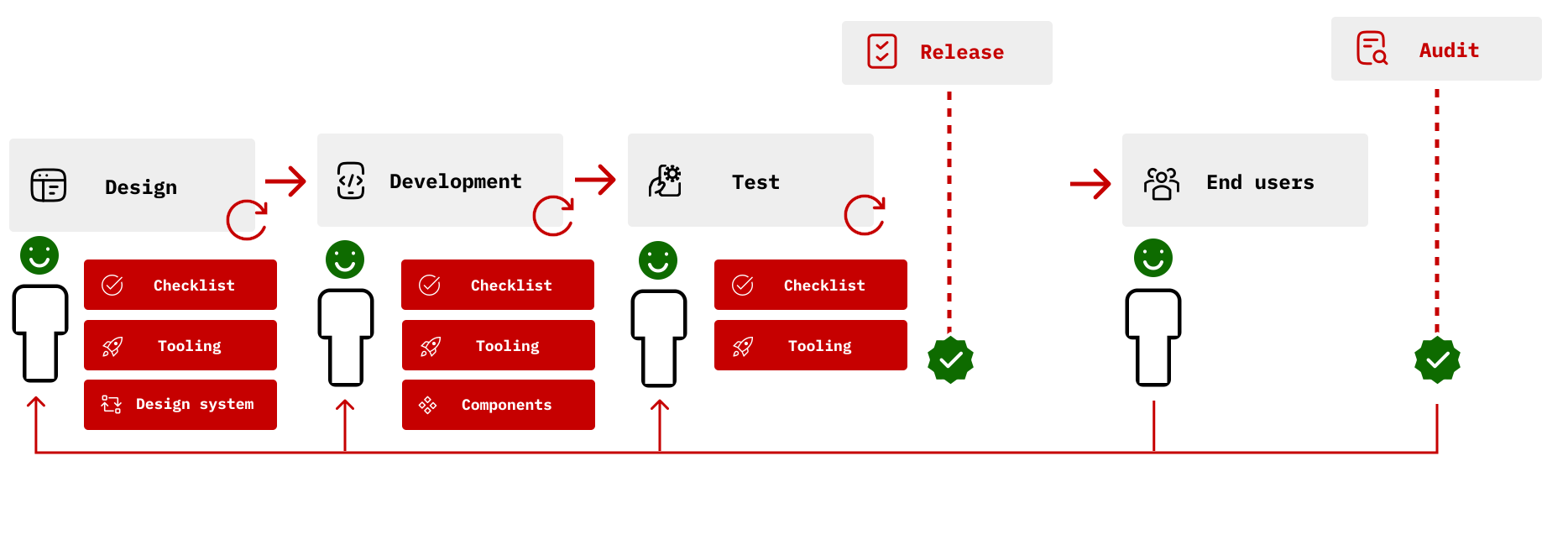 How to achieve shift left
Shifting left requires deliberate choices at three levels: organisation, process and people.
At organisational level, accessibility must be a conscious commitment. Strategy needs to include accessibility as a structural objective. Time must be allocated within planning cycles, and the right tools must be defined and made available across teams. Without leadership commitment and structural tooling, accessibility will always compete with other priorities and will often lose.
At process level, accessibility must be embedded in how work is defined and delivered. It needs to be part of the Definition of Done. Checklists, automated validation tools and accessibility criteria must be integrated into design reviews, development workflows and testing phases.
At people level, awareness and knowledge are essential. Teams need to understand not only what to do, but why they are doing it. At the same time, they must be equipped with practical tools that support them in applying accessibility consistently. When knowledge and tooling are aligned, accessibility becomes a natural part of quality instead of an additional burden.
In short: organisations must commit, processes must engage, and people must be empowered.
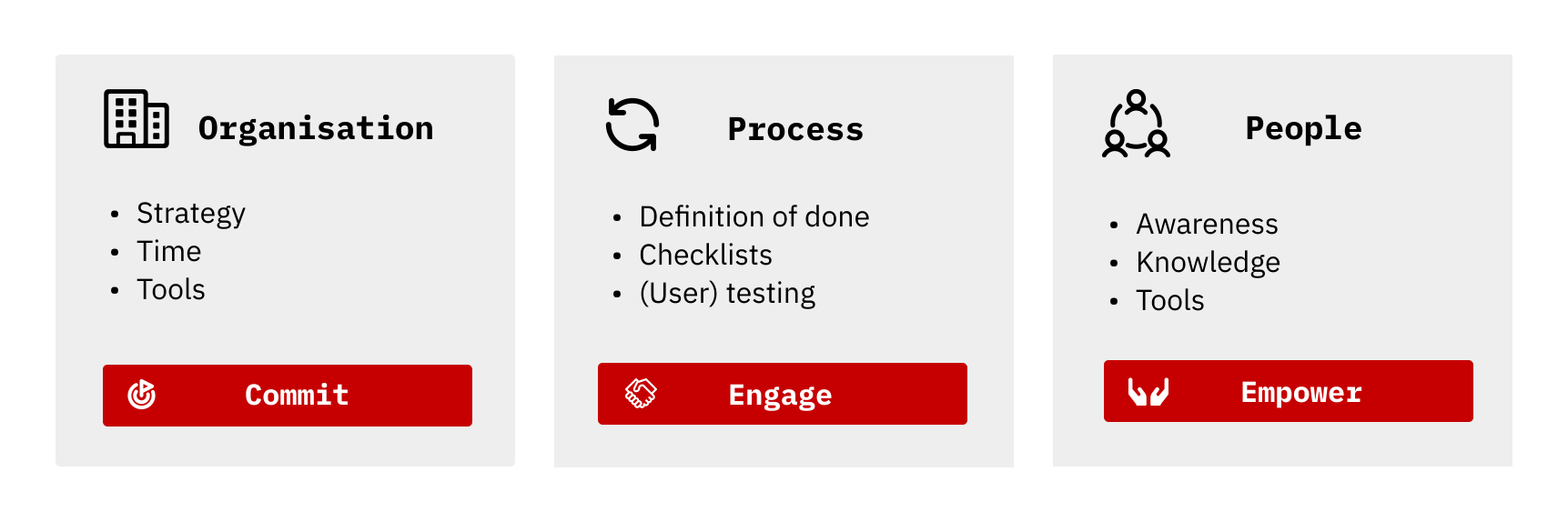 When these three elements align, shifting left becomes sustainable. Accessibility is no longer a late-stage correction, but an integrated quality principle. That is the point where organisations move from engaged ambition to embedded practice.
How can Abra help
At Abra, we support organisations across all three dimensions.
We help leadership define a clear accessibility strategy and roadmap, aligned with legal requirements and organisational goals. We equip teams with the knowledge and tools they need to apply accessibility confidently in design, development and testing.
Our ecosystem combines training, documentation, tooling and structured audits in a way that reinforces internal capability rather than replacing it. The goal is not dependency on external reviews, but sustainable maturity growth.
Shifting left is a strategic decision. We help you make it operational.
Ready to shift accessibility left? Let’s define your next step.
Further reading
-
Measuring app accessibility maturity
To meet the legal requirements of digital accessibility, apps need to be accessible for everyone, including people with disabilities. In Europe these are the EAA requirements. What this means, and how to achieve this as an organization, is often less clear. Read more »
-
Who gets left behind when apps ignore accessibility?
We often think of disability as something fixed and distant. But the truth is: we all face limitations, sometimes lifelong, sometimes for a short period, sometimes simply because of the situation we are in. If your mobile app works only for “ideal” users in “ideal” conditions, you will leave many people behind. Read more »
-
Your app has cavities: what toothbrushing can teach you about accessibility
What if I told you that brushing your teeth once a year is enough to keep them healthy? You’d laugh - because it’s ridiculous. Yet this is how many organisations treat accessibility. They run one audit, fix a few things, check the compliance box, and forget about it until the next deadline. But just like dental care, accessibility doesn’t work that way. Read more »